语言选择: 



Why Choose a Flame-Retardant Anti-Drone Safety Net?
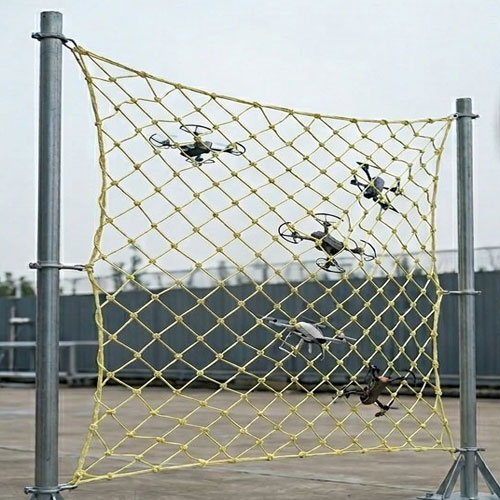
As drones become an everyday threat to critical infrastructure, military bases, airports, and public events, anti-drone rope nets have emerged as one of the most reliable physical countermeasures. They capture or block unauthorized UAVs without relying on jamming signals — but not all nets are created equal. When safety is on the line, flame-retardant performance is no longer optional. Here is why.
The Hidden Risk: Fire
A drone intercepted mid-flight rarely comes down gently. Damaged lithium-polymer batteries can short-circuit on impact, releasing intense heat and toxic smoke. In combat or security scenarios, downed drones may carry explosive or incendiary payloads. A standard rope net — made from untreated polyester or nylon — melts, ignites, and loses structural integrity within seconds under these conditions. The result is a failed interception and a secondary fire hazard.
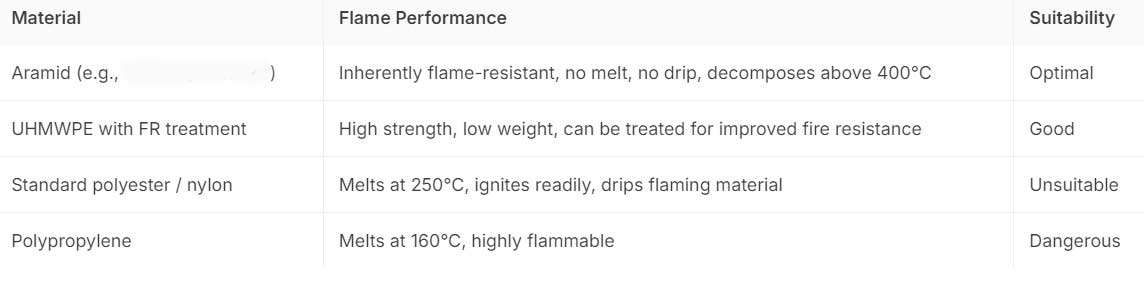
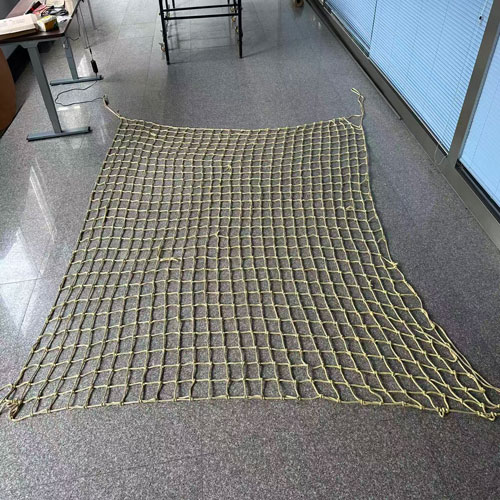
A flame-retardant drone safety net eliminates this risk. Engineered with inherently fire-resistant fibers such as aramid or specially treated high-tenacity materials, these nets self-extinguish when exposed to open flame. They do not drip molten material, they do not propagate fire, and they maintain load-bearing capacity long enough to contain the threat until responders arrive.
What Makes a Net Flame-Retardant
Not all flame-retardant claims are equal. Genuine protection comes from the fiber itself, not a surface coating that washes or wears away.
Where It Matters
Military & Defense. Battlefield drone interceptions frequently involve burning debris. A net that survives initial flame exposure prevents the drone from falling onto troops, vehicles, or ammunition storage.
Critical Infrastructure. Power substations, fuel depots, and chemical plants cannot afford to have burning net fragments spread fire across the facility. Flame-retardant nets contain the hazard at the point of capture.
Airports. A drone strike near jet fuel or on the tarmac is a catastrophe waiting to happen. Airport perimeter nets must perform under worst-case thermal conditions.
Public Events. Stadiums, concerts, and political gatherings present dense crowds. A net that drips molten polymer onto thousands of people is a liability no organizer can accept.
The Cost Equation
Flame-retardant aramid nets carry a higher upfront price — typically 2 to 4 times that of standard polyester equivalents. But the true cost comparison includes:
Replacement frequency: FR nets outlast untreated nets exposed to heat, UV, and mechanical stress
Liability: Fire propagation from a failed net can produce damages orders of magnitude beyond the net's purchase price
Insurance: Many insurers now require FR materials for perimeter security installations
Reputation: A single fire incident linked to substandard equipment erases years of trust
Conclusion
A drone safety net does one job: it stops a threat. If it burns, drips, or collapses before the situation is contained, it has failed. Choosing a flame-retardant net — built from aramid or proven FR-treated fiber — is the difference between a working security layer and a false sense of protection. For any installation where fire is even a remote possibility, there is no credible alternative.
Company:China Lifute Sling Group
Contact:Mss Wang
Tel:+8613365203036
Mobile:+8613365203036
E-mail:cnlift@126.com
Address:TaiZhou City, JiangSu Province, Lifute District ,China