语言选择: 



China Lifute Sling Group manufacture polyester webbing sling,polyester web sling,polyester flat webbing sling
Polyester Webbing Sling
Flat Woven Lifting Slings for Industrial, Construction & Marine Rigging Applications
EN 1492-1 Certified │ Safety Factor 7:1 │ WLL 1–30 Tons │ Eye & Eye
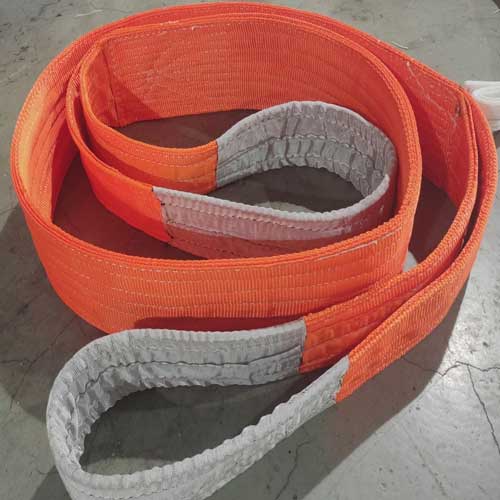
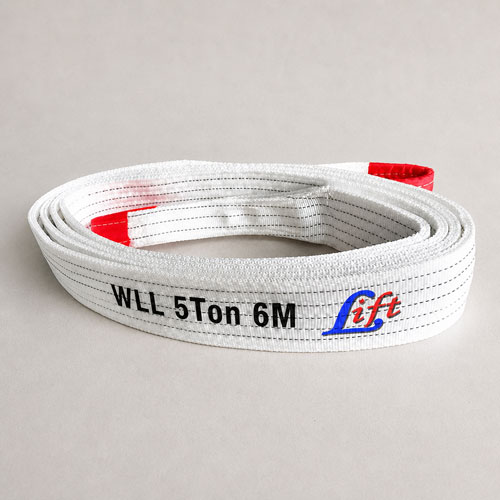
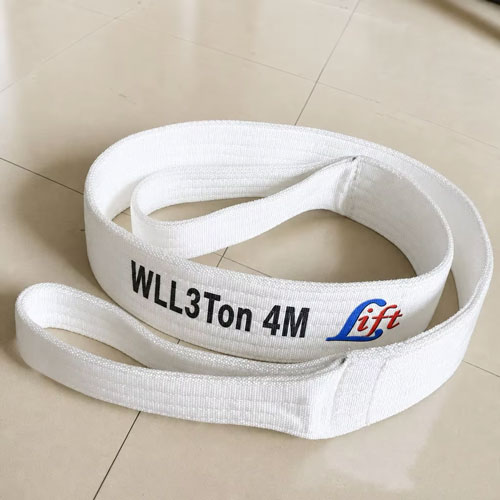
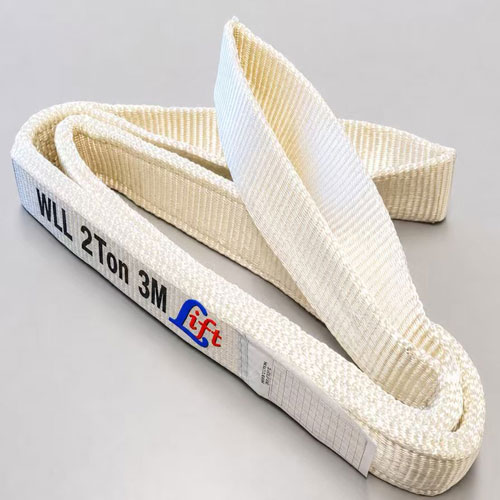
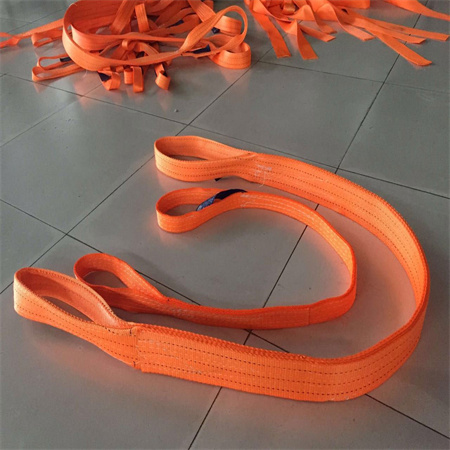
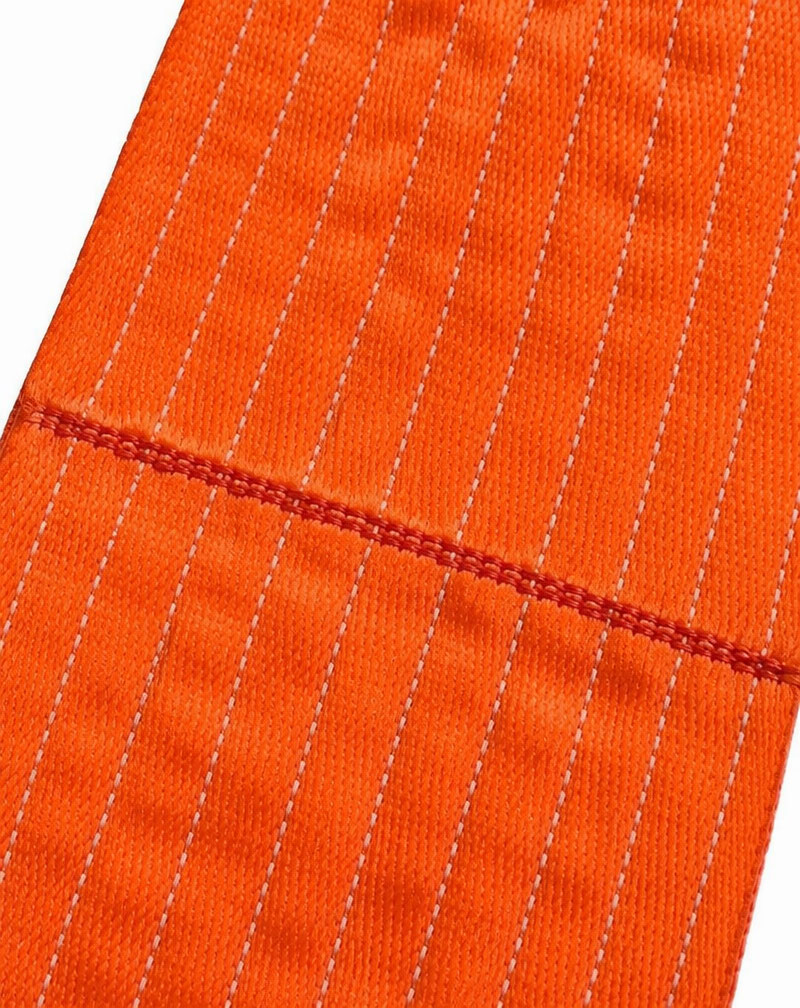
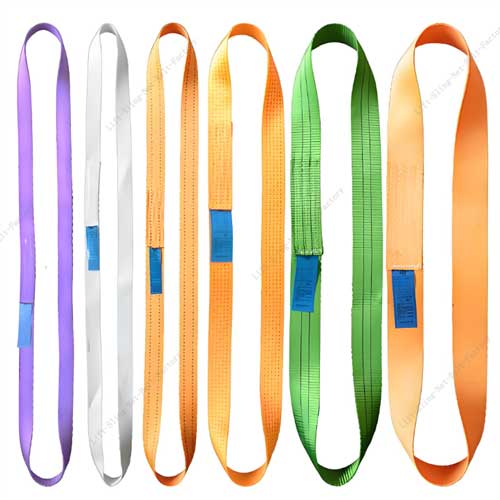
The Polyester Webbing Sling — also referred to as a flat webbing sling, polyester lifting strap, synthetic web sling, or eye & eye sling — is a high-strength, lightweight lifting device engineered from 100% high-tenacity polyester filament yarns woven into a flat, durable webbing construction. Unlike round slings, the flat profile provides a wider load-bearing surface, making polyester webbing slings ideal for handling sharp-edged, flat-surfaced, or finished loads where surface protection and stability are critical.
Our polyester webbing slings comply with EN 1492-1 (European Standard for Flat Woven Webbing Slings) and ASME B30.9, and are manufactured under a certified quality management system. Each sling is 100% proof-load tested to 2× its rated WLL and supplied with an individual serial-numbered test certificate, ensuring full traceability from raw material to final delivery.
Available in single-ply, duplex (2-ply), triplex (3-ply), and quadplex (4-ply) constructions to suit your exact load requirements, with Working Load Limits (WLL) from 1,000 kg to 30,000 kg (1 to 30 tons). Reinforced soft-eye loops at both ends provide secure attachment to crane hooks, shackles, and lifting points without the risk of metal-to-load contact damage.

✔ 100% high-tenacity polyester webbing — low elongation (≤3% at WLL), minimal stretch under load
✔ Flat woven profile distributes load pressure evenly — ideal for delicate, painted, or polished surfaces
✔ Reinforced soft-eye loops at both ends — no metal hardware, eliminates surface marring and spark risk
✔ Multi-ply options (1–4 layers) — select the optimal strength-to-flexibility ratio for your application
✔ Color-coded identification label per EN 1492-1 for instant, error-free WLL recognition at the worksite
✔ Safety factor 7:1 standard — exceeds minimum regulatory requirements for general-purpose lifting
✔ Excellent chemical resistance to oils, greases, most acids, and alkalis commonly found on job sites
✔ Wide temperature operating range: -40°C to +100°C without load de-rating
✔ UV-stabilized polyester webbing for prolonged service life in outdoor and exposed environments
✔ Lightweight and flexible — up to 80% lighter than equivalent-capacity chain or wire rope slings
✔ Serial-numbered identification label with CE marking, WLL, length, and manufacturing date
✔ 100% proof-load tested at 2× WLL before dispatch — test certificate supplied with every sling
Parameter | Specification | Reference Standard |
Material | 100% High-Tenacity Polyester (PES) | EN 1492-1 |
Construction | Single / Duplex / Triplex / Quadplex | EN 1492-1 |
Safety Factor | 7:1 (standard); 6:1 & 8:1 available on request | EN 1492-1 / ASME B30.9 |
WLL Range | 1,000 kg – 30,000 kg (1–30 Tons) | — |
Elongation at WLL | ≤3% | — |
Breaking Strength | 7× WLL (minimum) | EN 1492-1 |
End Fittings | Reinforced soft eyes (eye & eye standard) | — |
Eye Length | Standard: 300–500 mm; custom on request | — |
Temperature Range | -40°C to +100°C | — |
Webbing Width | 25 mm – 300 mm (depending on WLL & ply) | — |
Color Identification | Label color-coded per EN 1492-1 | EN 1492-1 |
Proof Load Test | 2× WLL (100% of production) | EN 1492-1 |
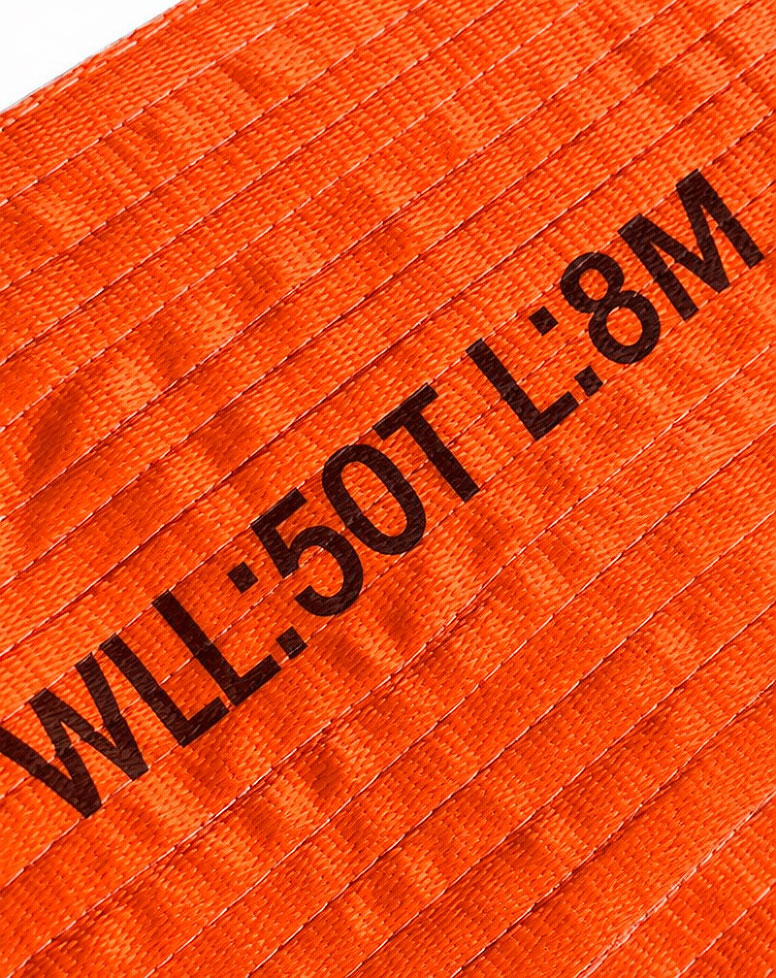
Marking | Sewn-in label: WLL, serial No., length, CE, mfg. date | EN 1492-1 |
Certification | CE, Test Certificate, EN 10204 3.1 available | — |
The table below provides standard WLL ratings for duplex (2-ply) polyester webbing slings. Higher WLL values are achievable with triplex or quadplex constructions. Custom capacities and effective lengths are available upon request.
WLL (Tons) | WLL (kg) | Webbing Width | Ply |
1.0 | 1,000 | 25–30 mm | Duplex |
2.0 | 2,000 | 50–60 mm | Duplex |
3.0 | 3,000 | 60–75 mm | Duplex |
4.0 | 4,000 | 75–90 mm | Duplex |
5.0 | 5,000 | 90–100 mm | Duplex |
6.0 | 6,000 | 100–120 mm | Duplex |
8.0 | 8,000 | 120–150 mm | Duplex |
10.0 | 10,000 | 150–180 mm | Duplex |
12.0 | 12,000 | 180–200 mm | Triplex |
15.0 | 15,000 | 200–240 mm | Triplex |
20.0 | 20,000 | 240–300 mm | Quadplex |
Note: 25T and 30T WLL available in quadplex construction. Contact our engineering team for non-standard sizing.
Polyester webbing slings support three standard hitch configurations. The effective Working Load Limit in each mode depends on the hitch type. Always apply the correct load factor when planning a lift.
Hitch Type | Load Factor | Eff. WLL (1T) | Application Notes |
Vertical (Straight) | 1.0 × WLL | 1,000 kg | Single-leg straight lift. Sling vertical, load suspended directly below hook. |
Choker Hitch | 0.8 × WLL | 800 kg | Sling wrapped around load, one eye passed through the other. For irregular-shaped loads requiring a tight grip. Choker angle ≤120°. |
Basket Hitch (0°) | 2.0 × WLL | 2,000 kg | Both eyes on hook, sling cradles load. Maximum capacity configuration. Load must be balanced. |
Basket Hitch (0–45°) | 1.4 × WLL | 1,400 kg | Two-leg basket with angle up to 45° from vertical. Use spreader bar when possible. |
Basket Hitch (45–60°) | 1.0 × WLL | 1,000 kg | Maximum basket angle 60° from vertical. Do not exceed this angle limit. |
2-Leg Bridle (0–45°) | 1.4 × WLL | 1,400 kg | Two independent slings on a master link. Angle measured at the apex. |
2-Leg Bridle (45–60°) | 1.0 × WLL | 1,000 kg | Two-leg arrangement with wider spread. Verify sling length symmetry. |
WARNING: Always derate the WLL according to the hitch type and angle. Never exceed rated capacity. Choker angle must not exceed 120°. Basket/bridle angle must not exceed 60° from vertical. Failure to apply correct derating may cause catastrophic sling failure.
Polyester webbing slings are available in multiple ply constructions to balance strength, flexibility, and cost. Choosing the correct ply ensures safe, efficient lifting without unnecessary bulk or expense.
Ply | Typical WLL Range | Best Suited For |
Single-Ply | 500 – 3,000 kg | Light-duty lifting, strapping, bundling, one-time-use applications. Maximum flexibility, lowest cost. |
Duplex (2-Ply) | 1,000 – 10,000 kg | The industry workhorse. General-purpose construction, manufacturing, warehouse, and logistics lifting. Optimal strength-to-flexibility balance. |
Triplex (3-Ply) | 8,000 – 15,000 kg | Heavy industrial lifting, steel fabrication, precast concrete handling, pipe lifting. Higher WLL with manageable flexibility. |
Quadplex (4-Ply) | 15,000 – 30,000 kg | Extreme heavy-duty lifting, offshore and marine applications, wind turbine erection, heavy machinery installation. Maximum strength, reduced flexibility. |
Polyester webbing slings are among the most widely used synthetic lifting devices across global industry sectors. Their combination of high strength, low weight, and non-damaging load contact makes them indispensable where traditional chain or wire rope slings are unsuitable.
▸ Construction & Civil Engineering — lifting steel beams, precast panels, rebar cages, and formwork systems
▸ Steel Fabrication & Metalworking — handling plate steel, structural sections, pipes, and coils without surface damage
▸ Marine, Offshore & Shipbuilding — shipyard lifting, dock-side cargo handling, barge loading, and offshore platform supply
▸ Oil, Gas & Petrochemical — pipe string handling, valve and flange installation, drilling equipment lifts in hazardous areas
▸ Wind Energy — tower section, nacelle, and blade handling during turbine assembly and maintenance
▸ Manufacturing & Assembly — production line material handling, machine positioning, and heavy component transfer
▸ Logistics, Warehousing & Transport — container loading, truck bed securing, palletized cargo handling
▸ Power Generation — generator stator and rotor lifts, transformer handling, substation equipment installation
▸ Automotive & Rail — vehicle body and chassis lifting, engine/transmission assembly line rigging
▸ Mining & Quarrying — equipment maintenance lifts, crusher component handling, conveyor installation
✔ Examine the entire webbing length for cuts, tears, abrasion, or broken stitching on both the body and eye loops
✔ Check for chemical attack indicators — discoloration, stiffening, or surface flaking of the polyester fibers
✔ Inspect for heat or friction damage — melting, glazing, charring, or fused fibers anywhere on the sling
✔ Verify the identification label is present, fully legible, and the WLL matches your intended load and hitch
✔ Confirm the eye loops are not stretched, deformed, or frayed — discard if shape is distorted
✔ Check that the sling lies flat without kinks, knots, or permanent twists from improper storage
A competent person must carry out a detailed inspection at least every 6 months, or more frequently in harsh environments, per LOLER (Lifting Operations and Lifting Equipment Regulations) and ASME B30.9 requirements. A written record of each examination must be maintained, including:
▸ Date of examination and name of competent person
▸ Sling identification (serial number) and WLL
▸ Condition assessment and any defects found
▸ Pass / fail / repair status with next examination due date
▸ Store flat or hung on proper sling racks — never leave coiled on the floor or exposed to moisture
▸ Keep in a cool, dry, well-ventilated area away from direct sunlight, heat sources, and chemicals
▸ Clean with mild soap and clean water only — never use chemical solvents, steam, or abrasive cleaning methods
▸ Do not drag slings over rough surfaces or sharp edges during handling — use edge protectors when necessary
▸ Allow wet or damp slings to dry naturally before storage to prevent mildew and fiber degradation
▸ There is no fixed service life — discard is based on condition, not age, as determined by the competent person
Company:China Lifute Sling Group
Contact:Mss Wang
Tel:+8613365203036
Mobile:+8613365203036
E-mail:cnlift@126.com
Address:TaiZhou City, JiangSu Province, Lifute District ,China